
How can hidden exports be brought into formal channels to increase income and foreign currency availability?
By Anthony Kon
What does South Sudan’s economy gain when a trader buys local products in pounds, exports them and retains the foreign currency proceeds abroad? When an investor leases agricultural land and exports the harvest, what benefits remain in the country beyond land rent and workers’ wages? And when livestock, timber and minerals cross the border, are their quantities and values accurately recorded, and are the associated taxes, fees and other legal obligations paid?
These questions concern how trade is organised, regardless of the nationality of those conducting it. The income, employment and local services generated by exports represent important economic gains. South Sudan can increase these benefits by encouraging domestic processing to raise product value, accurately documenting export quantities, prices and payments, and providing banking services that help channel earnings into economic activity. This requires enforcement of the law and simpler procedures, making formal channels more accessible and commercially worthwhile for producers and exporters.
These opportunities include sesame, gum arabic, sorghum, sunflower, livestock, timber, honey, fish, shea butter and minerals. Although their markets and export requirements differ, all can generate income, employment and public revenue. Weak recording of export quantities, values and receipts, however, makes it difficult to measure their economic contribution and identify opportunities to increase it.
How Exports Become Hidden
By “hidden exports”, I mean goods that leave the country without their quantities or actual values being adequately recorded. This can happen through bypassing customs procedures, declaring only part of a shipment or reporting a price below the actual selling price. Informal trade is a broader category and does not necessarily constitute smuggling. Likewise, legally exporting goods and receiving payment in an overseas bank account does not, in itself, make the transaction unrecorded or unlawful. These distinctions matter when identifying weaknesses and choosing an appropriate response.
Consider a trader who exchanges dollars for South Sudanese pounds in the parallel market, then uses the pounds to buy local products for export and sale in foreign currency. Producers receive income, while the dollars exchanged by the trader pass to the person who bought them; they have not necessarily disappeared from the economy. But if the goods leave without being recorded, legally payable public revenue may go uncollected. If the trader retains the export proceeds abroad, those earnings do not directly increase the foreign currency available through domestic banks to finance imports and economic activity. This explains the importance of linking export records with payments, so that the country can establish what benefits it retains from trade and what additional gains it could secure.
When the pound depreciates, a buyer holding dollars can purchase more local products for the same amount, unless prices in pounds rise sufficiently to offset the depreciation. This may encourage exports. Producers, however, must also pay more pounds for imported fuel, equipment and other inputs, potentially limiting their ability to expand production. A weaker pound may therefore increase exports of available goods without producing a sustained increase in output. If official records show no export growth, the causes require investigation: limited production, incomplete recording or goods leaving without declarations. Official figures alone cannot establish that smuggling is taking place.
The Legal Basis for Export Regulation
South Sudan already has a legal framework for organising exports. Section 13(2) of the Regulation of Imports and Exports Act, 2012, requires an application to the relevant Director for a general export licence for non-restricted goods. Restricted goods require special licences; the Act’s Second Schedule includes timber, charcoal and specified fresh, unprocessed fish. The requirements for each commodity and the procedures for obtaining approval should therefore be clearly explained, enabling exporters to comply without uncertainty or unnecessary delay.
An export licence is not sufficient on its own; customs procedures must also be completed. Section 146(1) of the Customs Service Act, 2013, Revised Edition 2022, requires goods exported by land to be brought to the customs station nearest the intended place of export. Inspection, documentation and clearance services should be available at accessible locations along authorised export routes. Clearer, faster and less costly procedures strengthen the incentive to use official crossings.
Mineral exports face additional controls. Regulation 89(8) of the Mining (Mineral Titles) Regulations, 2015, requires an export permit containing certification that the royalty due has been paid or secured to the satisfaction of the competent Minister. For royalty calculations, regulation 89(6) sets out requirements for measuring mineral weight, verifying quality through technical assays and determining value using international prices. These procedures help establish the value of exported minerals and collect the amounts legally due. They are specific to mining and do not automatically apply to agricultural exports.
Export regulation must also respect investors’ statutory rights. Section 37 of the Investment Promotion Act, 2009, protects investors’ lawful use of business proceeds and guarantees specified transfers through authorised banks, subject to taxes and other legal obligations. It does not require every exporter to repatriate all export earnings. The documents reviewed did not establish a current provision imposing that obligation universally. Any proposal to require repatriation or conversion into pounds therefore needs a clear legal basis and should not be presented as an existing obligation unless verified.
Documenting Trade and Supporting Production
Practical reform begins with documenting each shipment from its export declaration to receipt of payment, linking the customs declaration, sales invoice and payment record. This allows verification of origin, quantity, quality and buyer identity, and comparison of declared value with the amount actually paid. Regularly updated foreign currency reference prices could help identify undervaluation. They should accommodate differences in quality, transport costs and sales terms, serving as a verification tool rather than compulsory prices that disregard market conditions and drive exporters outside formal channels.
To increase production and exports, farmers need finance to cultivate their land and buyers they can depend on at harvest. They also need collection centres, silos and warehouses that protect crops from damage and facilitate transport to markets. Clear quality standards and payment on agreed dates reduce marketing risks and encourage expansion. Government could support roads and storage, banks could finance cultivation and crop purchases, and companies and cooperatives could organise marketing and exports. More buyers competing for produce would widen farmers’ choices and improve their ability to negotiate prices.
Ghana illustrates how a specialised bank can support exports. Its Export-Import Bank finances export-oriented farms and companies needing to process products or acquire machinery and packaging materials. South Sudan could assess establishing a similar institution with branches in production areas, or expanding export finance services within existing banks. The priority is to choose the arrangement that gives producers and exporters access to suitable finance and services at a reasonable cost, supported by effective management and oversight.
Putting Export Earnings to Work
Exporters also need banking services that encourage them to receive export earnings within the country: secure foreign currency accounts, competitive exchange rates when converting into pounds, and timely payment of legitimate overseas expenses. Depositing earnings in a domestic bank is different from converting them into local currency. Dollars need not automatically become pounds; they may remain in a foreign currency account under applicable rules. Any new requirements should clearly explain the conditions for depositing, retaining, using and converting proceeds, protecting exporters’ rights and strengthening confidence in banks.
To illustrate how export earnings can finance imports and build reserves, suppose an exporter receives US$100,000, allocates US$30,000 to legitimate external expenses and sells the remaining US$70,000 to an authorised domestic bank for pounds. The bank could sell US$50,000 to importers to pay for overseas purchases and the other US$20,000 to the central bank to strengthen its reserves. The exporter receives pounds for the dollars sold, while taxes and fees are collected separately under the law. These figures illustrate a possible mechanism; they are not proposed compulsory percentages.
Exporters’ foreign currency deposits must be distinguished from the central bank’s official reserves. Money in exporters’ accounts remains private property and does not automatically become official reserves. Under the IMF’s definition, reserves comprise external assets controlled by the monetary authorities and readily available for use. Export earnings can contribute to reserve accumulation when the central bank purchases some of them, as in the example above. Greater foreign currency availability alone, however, cannot ensure exchange rate stability; prudent public spending and liquidity management to contain inflation are also necessary.
Lower Transport Costs and Accountable Public Revenue
Regular exports could help reduce the cost of transporting imports into South Sudan. When a transporter expects a truck to return empty after delivering goods from Kenya or Uganda, the freight charge must recover a substantial part of the round-trip cost. A suitable export load on the return journey generates revenue in both directions, potentially allowing lower inward freight charges. Whether importers and consumers benefit depends on regular cargo availability, efficient border crossings and competition among transport companies.
Subsidised imports, such as fuel, also require monitoring to ensure that support reaches its intended domestic beneficiaries. Re-exporting them contrary to subsidy conditions may benefit overseas buyers at local consumers’ expense, reduce domestic availability and increase the need for replacement imports paid for in foreign currency. Wherever such subsidies exist, goods should be traced from importation through distribution, and any re-export checked against the law and subsidy conditions. The objective is to prevent misuse while permitting re-exports that meet legal requirements.
Private export receipts must also be distinguished from revenue legally due to the state. Sales proceeds belong to the exporter, subject to payment of taxes, fees and other legal obligations. Public collections must be remitted and distributed according to law. Section 6(4) of the 2012 trade Act directs fines, fees and donations paid to the relevant Directorate into the National Revenue Fund. A uniform sharing ratio between national and state governments should therefore not be assumed for every export-related receipt. Each collection requires an identifiable legal basis and applicable allocation rules.
Every production season that passes without better export organisation represents missed opportunities to raise producer incomes, collect revenue legally due and provide foreign currency for the country’s needs. Improving this system is therefore an economic priority requiring coordination among government agencies, banks, producers and exporters. My book, Investing in South Sudan: Opportunities, Risks, Reforms, and Pathways to Economic Transformation, Volume I: Foundations, Corridors, and Market Access, examines these issues in greater detail. I invite readers to explore its wider discussion of how the country’s resources and trade can generate lasting benefits for its people.
Disclaimer
The views expressed in this article and my book are entirely my own. They do not represent the official position of, or bind, any government, institution or organisation with which I am or have been associated, regardless of any position I currently hold or have previously held. These ideas are offered for informational purposes and to encourage constructive discussion, as proposals for consideration without any obligation to endorse or adopt them.
Sources
Regulation of Imports and Exports Act, 2012, sections 6(4) and 13(2), and Second Schedule.
Customs Service Act, 2013, Revised Edition 2022, section 146(1).
Investment Promotion Act, 2009, section 37.
Mining (Mineral Titles) Regulations, 2015, regulations 89(6) and 89(8), supplied document, printed page 103.
IMF, International Reserves and Foreign Currency Liquidity: dataset description.
Exact Provisions Cited
Only the provisions relied upon in this article are reproduced below.
Regulation of Imports and Exports Act, 2012 — section 13(2)
A person intending to export goods, other than restricted goods out of South Sudan shall apply to the Director for issue of a general export licence.
Regulation of Imports and Exports Act, 2012 — section 6(4)
Any monies paid to the Directorate as a result of fines, fees and donations shall be paid into the National Revenue Fund.
Regulation of Imports and Exports Act, 2012 — Second Schedule, Part II, paragraph 1(c)–(e)
(c) timber from any wood grown; (d) fresh unprocessed fish (Nile Perch and Tilapia); (e) wood charcoal.
Customs Service Act, 2013, Revised Edition 2022 — section 146(1)
Goods exported by land shall be brought to the customs station which is nearest to the intended place of export.
Investment Promotion Act, 2009 — section 37(1)–(2)
(1) Investors shall have an unrestricted right to use their investments and any incomes lawfully received there from for any lawful purpose and all proceeds of the operations of an enterprise may, subject to tax and other lawful obligations, be retained by the business organization, or disposed of in any lawful manner.
(2) Subject to tax and other lawful obligations, an enterprise to which this Act applies shall be guaranteed unconditional transferability in and out of Southern Sudan through any authorized dealer bank in freely convertible currency of — (a) capital for investment; (b) payments in respect of loan servicing where foreign loans have been obtained; and (c) the remittance of proceeds, net of all taxes and other statutory obligations, in the event of sale or liquidation of the enterprise or any interest attributable to the investment.
Mining (Mineral Titles) Regulations, 2015 — regulation 89(6)
For the purpose of calculation of royalties in any other transaction: (a) The quantity of Minerals by weight used in the computation shall be that quantity delivered for shipment or for domestic sale. The quantity by weight and quality of each mineral subject to royalty shall be properly determined by internationally accepted assay methods. The value of the Minerals will be converted by using metal prices as defined below. (b) In case of metallic Minerals having a London Metal Exchange price quotation or for which the saleable mineral content has a London Metal Exchange price quotation, the price used in the computation shall be the calendar quarter three-month London Metal Exchange monthly average official cash mean US Dollar price per unit for the same or most equivalent traded type or grade of the Minerals concerned. (c) For those Minerals having no London Metal Exchange price quotation, the price used in the computation shall be the average calendar quarter US Dollar price as published in any reputable publication specialised on the Minerals concerned.
Mining (Mineral Titles) Regulations, 2015 — regulation 89(8)
No person shall export any mineral, any product, substance refined or derived from any mineral unless he or she is in possession of a permit to export issued under the provisions of these regulations, which shall contain a certificate that royalty has been paid or secured to the satisfaction of the Minister.
The legislative references are to the English texts. The Arabic renderings of legislative titles and provisions in the companion article are not presented as officially approved translations.
ماذا يكسب جنوب السودان من صادراته؟
كيف يمكن إدخال الصادرات الخفية في القنوات الرسمية لزيادة الدخل وتوفير النقد الأجنبي؟
بقلم أنتوني كون
ماذا يكسب اقتصاد جنوب السودان عندما يشتري تاجر منتجات محلية بالجنيه، ثم يصدّرها ويحتفظ بحصيلة بيعها بالعملة الأجنبية في الخارج؟ وعندما يستأجر مستثمر أرضاً زراعية ويصدّر محصولها، ما المنافع التي تعود على البلاد إلى جانب إيجار الأرض وأجور العاملين؟ وحين تعبر الماشية والأخشاب والمعادن الحدود، هل تُسجَّل كمياتها وقيمتها بدقة، وهل تُسدَّد الضرائب والرسوم وغيرها من المستحقات القانونية المرتبطة بها؟
تتعلق هذه الأسئلة بكيفية تنظيم التجارة، بصرف النظر عن جنسية من يمارسها. فما توفّره الصادرات من دخل للمنتجين وفرص عمل وخدمات محلية يمثّل مكاسب مهمة للاقتصاد. ويمكن لجنوب السودان زيادة هذه المكاسب بتشجيع التصنيع المحلي لرفع قيمة المنتجات، وتوثيق الكميات المصدَّرة وأسعارها ومدفوعاتها بدقة، وتوفير خدمات مصرفية تساعد على توجيه عائداتها إلى تمويل النشاط الاقتصادي. ويتطلب ذلك تطبيق القانون وتبسيط الإجراءات، بما يجعل التعامل عبر القنوات الرسمية أكثر سهولة وجدوى للمنتجين والمصدّرين.
وتشمل هذه الفرص السمسم والصمغ العربي والذرة الرفيعة وعبّاد الشمس والماشية والأخشاب والعسل والأسماك وزبدة الشيا والمعادن. ورغم اختلاف أسواق هذه المنتجات وشروط تصديرها، فإنها جميعاً قادرة على زيادة الدخل وتوفير فرص العمل والإيرادات العامة. لكن ضعف تسجيل الكميات المصدَّرة وقيمتها وعائدات بيعها يجعل من الصعب قياس ما تحقّقه للاقتصاد، وتحديد الفرص المتاحة لزيادة الاستفادة منها.
كيف تصبح الصادرات خفية؟
أقصد بـ«الصادرات الخفية» السلع التي تخرج من البلاد دون تسجيل كمياتها أو قيمتها الحقيقية بصورة كافية. وقد يحدث ذلك عبر تجاوز الإجراءات الجمركية، أو تسجيل جزء من الكمية، أو التصريح بسعر يقلّ عن سعر البيع الفعلي. أما التجارة غير الرسمية فهي أوسع نطاقاً، ولا تعني بالضرورة التهريب. كذلك، فإن تصدير سلعة بصورة قانونية وتلقّي ثمنها في حساب مصرفي بالخارج لا يجعل المعاملة، في حدّ ذاتها، غير مسجّلة أو مخالفة للقانون. وهذه الفروق مهمة لتحديد موضع الخلل ومعالجة كل حالة بما يناسبها.
ولنأخذ مثالاً لتاجر يستبدل دولارات بالجنيه في السوق الموازية، ثم يشتري بالجنيه منتجات محلية يصدّرها ويبيعها بالعملة الأجنبية. يحصل المنتجون على دخل، وتنتقل الدولارات التي صرفها التاجر إلى من اشتراها منه؛ فهي لم تختفِ بالضرورة من الاقتصاد. لكن إذا خرجت السلع دون تسجيل، فقد تضيع إيرادات مستحقة للدولة. وإذا احتفظ التاجر بحصيلة البيع في الخارج، فإنها لا تضيف مباشرةً إلى النقد الأجنبي المتاح عبر المصارف المحلية لتمويل الواردات والنشاط الاقتصادي. ومن هنا تأتي أهمية ربط سجلات السلع المصدَّرة بمدفوعاتها، لتحديد ما تحتفظ به البلاد من عائدات التجارة وما يمكنها تحقيقه من مكاسب إضافية.
وعندما تنخفض قيمة الجنيه، يستطيع المشتري الذي يحمل دولارات شراء كمية أكبر من المنتجات المحلية بالمبلغ نفسه، ما لم ترتفع أسعارها بالجنيه بما يعادل انخفاض قيمة العملة. وهذا قد يشجّع التصدير. لكن المزارع والمنتج يدفعان، في المقابل، جنيهات أكثر لشراء الوقود والمعدات والمستلزمات المستوردة، مما قد يحدّ من قدرتهما على زيادة الإنتاج. لذلك، قد يؤدي ضعف الجنيه إلى تصدير المزيد من السلع المتاحة، دون زيادة مستدامة في الكميات المنتجة. وإذا لم تُظهر السجلات الرسمية نمواً في الصادرات، فعلينا التحقّق مما إذا كان السبب محدودية الإنتاج، أو نقص تسجيل المعاملات، أو خروج سلع دون تصريح؛ فلا تكفي الأرقام الرسمية وحدها للجزم بوجود تهريب.
الأساس القانوني لتنظيم الصادرات
يمتلك جنوب السودان أساساً قانونياً لتنظيم الصادرات. فالفقرة (٢) من المادة ١٣ من قانون تنظيم الواردات والصادرات لسنة ٢٠١٢ تشترط التقدّم إلى المدير المختص بطلب للحصول على ترخيص تصدير عام للسلع غير المقيّدة. أما السلع المقيّدة فتحتاج إلى تراخيص خاصة، ويشمل الجدول الثاني من القانون الأخشاب والفحم النباتي وأنواعاً محددة من الأسماك الطازجة غير المصنّعة. ولذلك، ينبغي توضيح شروط تصدير كل سلعة والإجراءات اللازمة للحصول على الموافقات، حتى يتمكّن المصدّرون من الالتزام بالقانون دون غموض أو تأخير غير مبرّر.
ولا يكفي الحصول على ترخيص التصدير، بل يجب استيفاء الإجراءات الجمركية أيضاً. فالفقرة (١) من المادة ١٤٦ من قانون الجمارك لسنة ٢٠١٣، الطبعة المنقّحة لعام ٢٠٢٢، تشترط إحضار السلع المصدَّرة براً إلى أقرب مركز جمركي من الموقع المقرّر لخروجها من البلاد. ولتيسير الالتزام، ينبغي توفير خدمات الفحص والتوثيق والتخليص الجمركي في مواقع يسهل الوصول إليها على مسارات التصدير المعتمدة. فكلما كانت الإجراءات أوضح وأسرع وأقل كلفة، زاد الحافز إلى استخدام المنافذ الرسمية.
أما صادرات المعادن فتخضع لضوابط إضافية. فالفقرة (٨) من المادة ٨٩ من لوائح التعدين المتعلقة بالتراخيص والحقوق المعدنية لسنة ٢٠١٥ تشترط الحصول على تصريح تصدير يتضمّن شهادة بسداد الإتاوة المستحقة أو تقديم ضمان لسدادها يقبله الوزير المختص. ولأغراض احتساب الإتاوة، تحدّد الفقرة (٦) كيفية قياس وزن المعادن والتحقق من جودتها بالتحليل الفني، وتقييمها استناداً إلى الأسعار الدولية. وتساعد هذه الإجراءات على تحديد قيمة المعادن المصدَّرة وتحصيل المستحقات القانونية عنها. وهي ضوابط خاصة بقطاع التعدين، ولا تنطبق تلقائياً على الصادرات الزراعية.
وفي المقابل، يجب أن يحترم تنظيم الصادرات الحقوق التي يكفلها القانون للمستثمرين. فالمادة ٣٧ من قانون تشجيع الاستثمار لسنة ٢٠٠٩ تحمي حق المستثمر في استخدام عائدات نشاطه لأغراض مشروعة، وتضمن تحويلات محددة عبر المصارف المعتمدة، مع مراعاة الضرائب والالتزامات القانونية الأخرى. لكنها لا تفرض على جميع المصدّرين إعادة كامل حصيلة صادراتهم إلى البلاد. ولم يتسنَّ، من الوثائق التي جرت مراجعتها، التحقق من وجود نص نافذ يفرض هذا الالتزام على الجميع. لذلك، فإن أي مقترح لإلزام المصدّرين بإعادة الحصيلة أو تحويلها إلى الجنيه يحتاج إلى أساس قانوني واضح، ولا ينبغي تقديمه بوصفه التزاماً قائماً ما لم يثبت ذلك.
توثيق التجارة ودعم الإنتاج
يبدأ الإصلاح العملي بتوثيق كل شحنة، من التصريح بتصديرها إلى استلام ثمنها، وربط البيان الجمركي بفاتورة البيع وسجل الدفع. ويتيح ذلك التحقق من منشأ السلع وكميتها وجودتها وهوية المشتري، ومقارنة القيمة المعلنة بالمبلغ المدفوع فعلياً. ويمكن نشر أسعار استرشادية بالعملات الأجنبية وتحديثها بانتظام، للمساعدة في كشف التصريح بقيم أقل من القيمة الحقيقية. وينبغي أن تراعي هذه الأسعار الفروق في الجودة وتكاليف النقل وشروط البيع، وأن تُستخدم مرجعاً للتحقق، لا أسعاراً إلزامية تتجاهل واقع السوق وتدفع المصدّرين إلى التعامل خارج القنوات الرسمية.
ولزيادة الإنتاج والصادرات، يحتاج المزارع إلى تمويل يتيح له الزراعة، وإلى مشترين يستطيع الاعتماد عليهم عند الحصاد. كما يحتاج إلى مراكز لتجميع المحاصيل وصوامع ومخازن تحميها من التلف وتسهّل نقلها إلى الأسواق. ويساعد تصنيف المحاصيل وفق معايير جودة واضحة، ودفع أثمانها في المواعيد المتفق عليها، على تقليل مخاطر البيع وتشجيع التوسّع في الإنتاج. ويمكن توزيع الأدوار بحيث تدعم الحكومة الطرق والتخزين، وتموّل المصارف الزراعة وشراء المحاصيل، وتتولى الشركات والتعاونيات التسويق والتصدير. ومع تعدّد المشترين وتنافسهم، تتسع خيارات المزارعين وتتحسّن قدرتهم على التفاوض على الأسعار.
وتوضح تجربة غانا كيف يمكن لبنك متخصص أن يدعم الصادرات؛ فبنك التصدير والاستيراد فيها يقدّم تمويلاً للمزارع المنتجة للتصدير، وللشركات التي تحتاج إلى تصنيع منتجاتها أو شراء الآلات ومواد التعبئة. ويمكن لجنوب السودان دراسة إنشاء بنك مماثل له فروع في مناطق الإنتاج، أو توسيع خدمات تمويل الصادرات في المصارف القائمة. والمهم هو اختيار الحل الذي يسهّل حصول المنتجين والمصدّرين على التمويل والخدمات اللازمة بكلفة مناسبة، مع ضمان كفاءة الإدارة والرقابة.
توظيف حصيلة الصادرات في الاقتصاد
يحتاج المصدّرون أيضاً إلى خدمات مصرفية تشجّعهم على تلقّي حصيلة صادراتهم داخل البلاد، تشمل حسابات آمنة بالعملات الأجنبية، وأسعار صرف تنافسية عند التحويل إلى الجنيه، وإمكانية سداد النفقات الخارجية المشروعة دون تأخير غير مبرّر. ومن المهم التمييز بين إيداع الحصيلة في مصرف محلي وتحويلها إلى العملة المحلية؛ فإيداع الدولارات لا يعني تحويلها تلقائياً إلى جنيهات، بل يمكن الاحتفاظ بها في حساب بالعملة الأجنبية وفق القواعد المعمول بها. لذلك، ينبغي أن توضّح أي ضوابط جديدة شروط إيداع الحصيلة والاحتفاظ بها واستخدامها وتحويلها، بما يحفظ حقوق المصدّرين ويعزّز الثقة في المصارف.
ولتوضيح كيف تسهم حصيلة الصادرات في تمويل الواردات وبناء الاحتياطيات، لنفترض أن مصدّراً حصل على ١٠٠ ألف دولار من بيع منتجاته، وخصّص ٣٠ ألفاً لنفقات خارجية مشروعة، ثم باع الـ٧٠ ألفاً المتبقية لمصرف محلي معتمد مقابل الجنيه. يمكن للمصرف بيع ٥٠ ألف دولار لمستوردين لسداد مشترياتهم من الخارج، وبيع الـ٢٠ ألفاً الأخرى للبنك المركزي لتعزيز احتياطياته. ويحصل المصدّر على المقابل بالجنيه للدولارات التي باعها، بينما تُحصَّل الضرائب والرسوم بصورة منفصلة وفق القانون. وهذه أرقام افتراضية لشرح آلية ممكنة، وليست نسباً إلزامية مقترحة.
ومن المهم التمييز بين ودائع المصدّرين بالعملات الأجنبية والاحتياطيات الرسمية لدى البنك المركزي. فالأموال المودعة في حسابات المصدّرين تظل أموالاً خاصة، ولا تصبح تلقائياً جزءاً من الاحتياطيات الرسمية. ووفق تعريف صندوق النقد الدولي، تتكوّن هذه الاحتياطيات من أصول خارجية تخضع لسيطرة السلطات النقدية وتكون متاحة للاستخدام عند الحاجة. ويمكن لحصيلة الصادرات أن تسهم في زيادتها عندما يشتري البنك المركزي جزءاً منها، كما في المثال السابق. لكن زيادة النقد الأجنبي المتاح لا تكفي وحدها لاستقرار سعر الصرف؛ إذ يتطلب ذلك أيضاً ضبط الإنفاق العام وإدارة السيولة بما يحدّ من التضخم.
خفض كلفة النقل وحماية الإيرادات العامة
قد يساعد انتظام الصادرات على خفض كلفة نقل الواردات إلى جنوب السودان. فعندما يتوقّع الناقل عودة شاحنته فارغة بعد تسليم البضائع القادمة من كينيا أو أوغندا، فإنه يحدّد أجرة النقل بما يغطي جانباً كبيراً من كلفة الذهاب والعودة. أما إذا وجد حمولة تصدير مناسبة في رحلة العودة، فإنه يحقق إيراداً من الاتجاهين، مما قد يتيح خفض أجرة نقل الواردات. ويتوقف وصول هذه الوفورات إلى المستوردين والمستهلكين على انتظام الحمولات، وسهولة عبور الحدود، والمنافسة بين شركات النقل.
وتحتاج السلع المستوردة المدعومة، مثل الوقود، إلى متابعة تضمن وصول الدعم إلى المستفيدين المقصودين داخل البلاد. فإذا أُعيد تصديرها بالمخالفة لشروط الدعم، فقد يستفيد منه مشترون في الخارج على حساب المستهلك المحلي، وتقلّ الكميات المتاحة في السوق، وتزداد الحاجة إلى استيراد بدائل بالنقد الأجنبي. لذلك، حيثما وُجد هذا الدعم، ينبغي تتبّع السلع من الاستيراد إلى التوزيع، والتحقق من التزام أي إعادة تصدير بالقانون وشروط الدعم. والمقصود هو منع إساءة استخدام الدعم، مع السماح بإعادة التصدير متى استوفت الشروط القانونية.
ومن الضروري التمييز بين حصيلة الصادرات التي يملكها المصدّر والإيرادات المستحقة للدولة. فعائدات البيع تظل ملكاً للمصدّر، مع وجوب سداد الضرائب والرسوم وغيرها من الالتزامات القانونية. أما المبالغ المحصّلة لحساب الدولة، فيجب توريدها وتوزيعها وفق القانون. وتنص الفقرة (٤) من المادة ٦ من قانون تنظيم الواردات والصادرات لسنة ٢٠١٢ على توريد الغرامات والرسوم والتبرعات المدفوعة إلى الإدارة المختصة إلى الصندوق القومي للإيرادات. ولذلك، لا ينبغي افتراض نسبة موحّدة لتقاسم جميع الإيرادات المرتبطة بالصادرات بين الحكومة القومية والولايات؛ بل يجب تحديد أساس تحصيل كل إيراد والقواعد التي تنظّم توزيعه.
إن كل موسم إنتاج يمرّ دون تحسين تنظيم الصادرات يعني فرصاً ضائعة لزيادة دخل المنتجين، وتحصيل الإيرادات المستحقة، وتوفير النقد الأجنبي لتمويل احتياجات البلاد. لذلك، فإن تطوير هذه المنظومة أولوية اقتصادية تتطلب تنسيقاً بين الجهات الحكومية والمصارف والمنتجين والمصدّرين. ويتناول كتابي «الاستثمار في جنوب السودان: الفرص والمخاطر والإصلاحات ومسارات التحول الاقتصادي»، المجلد الأول: «الأسس والممرات والوصول إلى الأسواق»، هذه القضايا بمزيد من التفصيل. وأدعو القرّاء إلى الاطلاع على النقاش الأوسع فيه حول كيفية تحويل موارد البلاد وتجارتها إلى مكاسب مستدامة تعود بالنفع على أهلها.
إخلاء المسؤولية
الآراء الواردة في هذا المقال وفي كتابي تعبّر عن وجهة نظري الشخصية وحدها، ولا تمثّل الموقف الرسمي لأي حكومة أو مؤسسة أو منظمة أرتبط بها حالياً أو سبق أن ارتبطت بها، ولا تُلزم أياً منها، بصرف النظر عن أي منصب أشغله أو سبق أن شغلته. وتُطرح هذه الأفكار لأغراض المعلومات وتشجيع النقاش البنّاء، بوصفها مقترحات للنظر فيها، دون أي إلزام بتأييدها أو تبنّيها.
المصادر
قانون تنظيم الواردات والصادرات لسنة ٢٠١٢، المادتان ٦(٤) و١٣(٢)، والجدول الثاني.
قانون الجمارك لسنة ٢٠١٣، الطبعة المنقّحة لعام ٢٠٢٢، المادة ١٤٦(١).
قانون تشجيع الاستثمار لسنة ٢٠٠٩، المادة ٣٧.
لوائح التعدين المتعلقة بالتراخيص والحقوق المعدنية لسنة ٢٠١٥، المادة ٨٩(٦) و(٨)، الوثيقة المقدّمة، الصفحة المطبوعة ١٠٣.
صندوق النقد الدولي، وصف بيانات الاحتياطيات الدولية والسيولة بالعملات الأجنبية.
النصوص القانونية المستشهد بها
ترد أدناه فقط الأحكام التي استند إليها هذا المقال، بترجمة عربية غير رسمية عن النصوص الإنجليزية.
قانون تنظيم الواردات والصادرات لسنة ٢٠١٢ — المادة ١٣(٢)
على أي شخص يعتزم تصدير سلع، باستثناء السلع المقيّدة، إلى خارج جنوب السودان أن يتقدّم إلى المدير بطلب لإصدار ترخيص تصدير عام.
قانون تنظيم الواردات والصادرات لسنة ٢٠١٢ — المادة ٦(٤)
تُودَع أي أموال تُدفع إلى الإدارة نتيجة الغرامات والرسوم والتبرعات في الصندوق القومي للإيرادات.
قانون تنظيم الواردات والصادرات لسنة ٢٠١٢ — الجدول الثاني، الجزء الثاني، الفقرة ١(ج)–(هـ)
(ج) الأخشاب من أي خشب نامٍ؛ (د) الأسماك الطازجة غير المصنّعة (سمك الفرخ النيلي والبلطي)؛ (هـ) الفحم النباتي.
قانون الجمارك لسنة ٢٠١٣، الطبعة المنقّحة لعام ٢٠٢٢ — المادة ١٤٦(١)
يجب إحضار السلع المصدَّرة براً إلى المركز الجمركي الأقرب إلى المكان المقرّر لتصديرها.
قانون تشجيع الاستثمار لسنة ٢٠٠٩ — المادة ٣٧(١)–(٢)
(١) للمستثمرين حق غير مقيّد في استخدام استثماراتهم وأي دخول يتلقونها بصورة قانونية لأي غرض مشروع، ويجوز لمنظمة الأعمال، مع مراعاة الضرائب والالتزامات القانونية الأخرى، الاحتفاظ بجميع عائدات عمليات المشروع أو التصرف فيها بأي طريقة مشروعة.
(٢) مع مراعاة الضرائب والالتزامات القانونية الأخرى، يُضمن لأي مشروع يسري عليه هذا القانون قابلية التحويل غير المشروطة إلى جنوب السودان ومنه، عبر أي مصرف معتمد يتعامل بعملة حرة التحويل، لما يلي: (أ) رأس المال المخصّص للاستثمار؛ (ب) المدفوعات الخاصة بخدمة القروض عند الحصول على قروض أجنبية؛ و(ج) تحويل العائدات، بعد خصم جميع الضرائب والالتزامات القانونية الأخرى، في حالة بيع المشروع أو تصفيته أو بيع أي مصلحة تعود إلى الاستثمار.
لوائح التعدين المتعلقة بالتراخيص والحقوق المعدنية لسنة ٢٠١٥ — المادة ٨٩(٦)
لأغراض حساب الإتاوات في أي معاملة أخرى: (أ) تكون كمية المعادن بالوزن المستخدمة في الحساب هي الكمية المسلّمة للشحن أو للبيع المحلي. ويجب تحديد كمية كل معدن خاضع للإتاوة، من حيث الوزن والجودة، على نحو سليم باستخدام طرق تحليل مقبولة دولياً. وتُحوّل قيمة المعادن باستخدام أسعار المعادن المحددة أدناه. (ب) في حالة المعادن الفلزية التي لها سعر معلن في بورصة لندن للمعادن، أو التي يكون لمحتواها المعدني القابل للبيع سعر معلن فيها، يكون السعر المستخدم في الحساب هو المتوسط الشهري الرسمي للسعر النقدي بالدولار الأمريكي في بورصة لندن للمعادن للربع التقويمي البالغ ثلاثة أشهر، لكل وحدة من النوع أو الدرجة المتداولة ذاتها أو الأقرب معادلةً للمعدن المعني. (ج) بالنسبة إلى المعادن التي لا يوجد لها سعر معلن في بورصة لندن للمعادن، يكون السعر المستخدم في الحساب هو متوسط السعر بالدولار الأمريكي للربع التقويمي كما يُنشر في أي مطبوعة موثوقة متخصصة في المعادن المعنية.
لوائح التعدين المتعلقة بالتراخيص والحقوق المعدنية لسنة ٢٠١٥ — المادة ٨٩(٨)
لا يجوز لأي شخص تصدير أي معدن أو أي منتج أو مادة مكررة أو مشتقة من أي معدن ما لم يكن حائزاً على تصريح تصدير صادر بموجب أحكام هذه اللوائح، ويتضمن شهادة بأن الإتاوة قد دُفعت أو جرى تأمينها بما يرضي الوزير.
أسماء التشريعات ومضامين أحكامها الواردة بالعربية مترجمة عن النصوص الإنجليزية المستشهد بها، ولا تُقدَّم بوصفها ترجمة رسمية معتمدة.
Related Book / الكتاب ذو الصلة
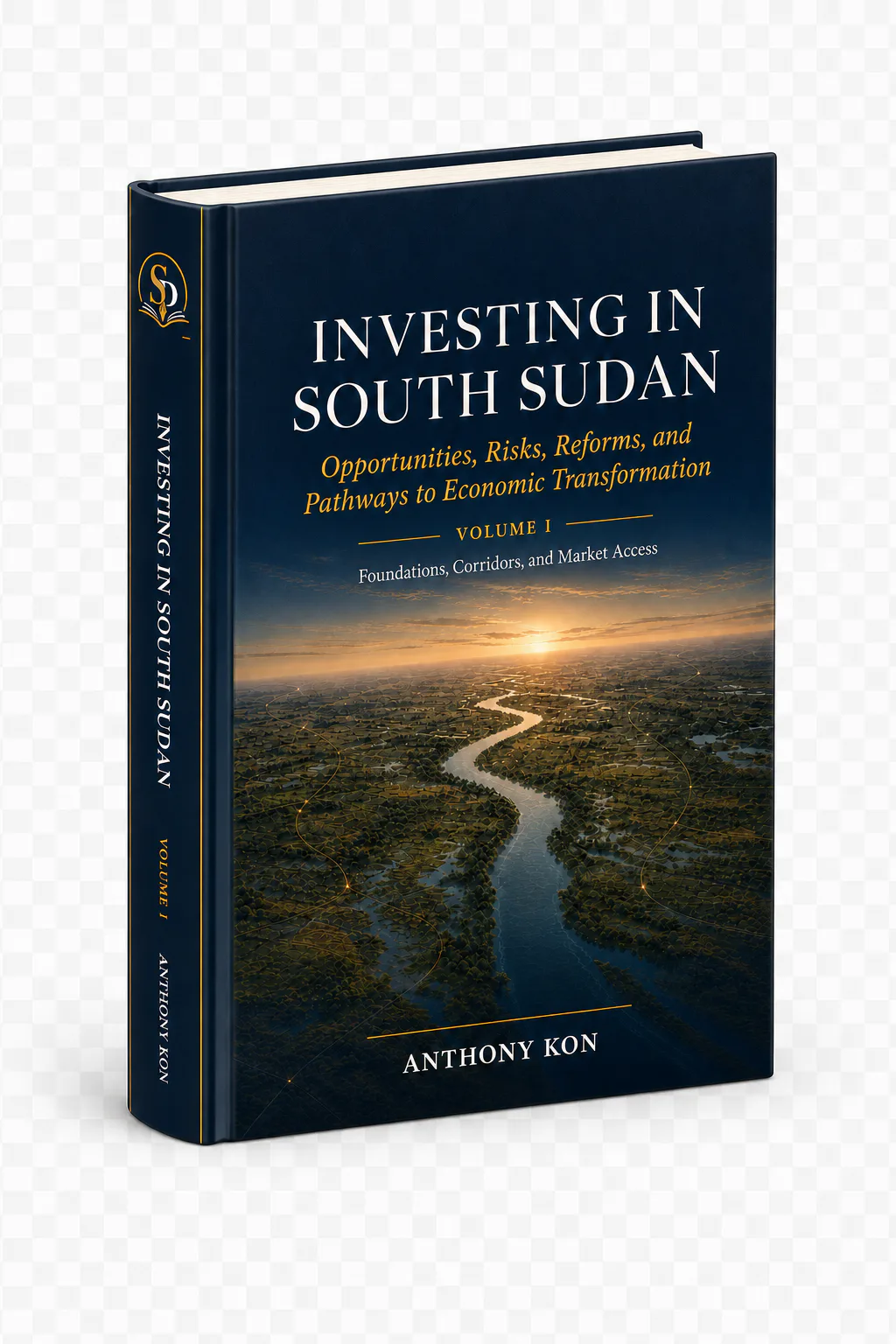
Investing in South Sudan: Opportunities, Risks, Reforms, and Pathways to Economic Transformation
Volume I: Foundations, Corridors, and Market Access
Anthony Kon · Sarkon Plus Publishing